
Ingrown Toenail Pain After Football: How to Fix It Before Pre-Season
Ingrown Toenail Pain After Football: How to Fix It Before Pre-Season
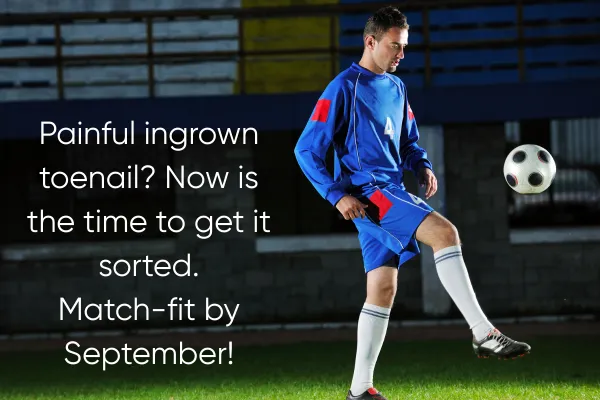
If you play football (even just at weekends), you’re more likely to notice ingrown toenail pain at the end of the season. Months of tight boots, repeated kicking, and toe knocks can leave the nail edge digging into the skin. With the World Cup starting this week, it’s a good reminder to sort toe problems now - while your season is finished - so you’re comfortable (and match-ready) again by September.
What causes ingrown toenails?
Short answer: An ingrown toenail happens when the nail edge presses into (or breaks) the skin, causing pain, swelling, and sometimes infection.
For football fans who play, it’s usually a mix of pressure and repeated micro-trauma. We see this a lot in recreational footballers around Solihull at the end of the season. Common causes include:
Boots that are narrow or slightly short (toe box pressure is a big trigger)
Repeated impact from striking the ball and sudden stops/turns
Toe knocks (being stood on, collisions, or a bruised/black toenail)
Sweaty feet softening the skin so the nail edge digs in more easily
Nail cutting habits (cutting too short or rounding the corners)
Natural nail shape (some nails curve more and are more likely to catch)
End-of-season is when many players finally stop “playing through it” and realise how sore the toe has become.
Why address it now (before September)?
Short answer: Because you’ve got time to treat it properly, let the toe settle, and get back into boots without rushing.
If you leave an ingrown toenail until pre-season, you can end up trying to train while it’s inflamed - or making a quick decision when you’re already back in football boots.
A simple way to think about it:
June: You notice the problem and get it assessed (before it becomes infected).
July: You’ve got space for treatment and follow-up without match pressure.
August: You can test boots, build training back up, and catch any flare-ups early.
September: You start the season with one less thing to worry about.
If nail surgery is likely, planning it in the off-season often gives you a more comfortable runway to heal and rebuild tolerance before you’re back to weekly matches.
How does podiatry help with ingrown toenails?
Short answer: Podiatry can relieve pain quickly, remove the nail spike safely, and help prevent it coming back.
In clinic, we typically:
Assess the nail and surrounding skin (and check for infection)
Gently remove the painful nail edge/spike and clear any trapped debris
Advise on dressings and aftercare to calm the skin
Review boot fit and sizing (often the main trigger in footballers)
Create a prevention plan (nail cutting, skin care, and training/boot tweaks)
What to expect: Many people feel relief quickly once the nail edge is removed. If the ingrown nail keeps returning, we’ll talk through longer-term options such as nail surgery.
Read more here https://www.nhs.uk/conditions/ingrown-toenail/
How long does treatment take?
Short answer: Mild cases can improve within days, but recurring ingrown toenails may need a planned procedure and a few weeks of healing.
Timeframes vary depending on:
Severity (mild soreness vs. swollen/infected tissue)
How long it’s been there (weeks vs. months)
Boot pressure (if the toe is still being squeezed, it won’t settle)
Activity level (returning to football too quickly can flare it up)
Whether nail surgery is needed (for repeat problems)
What can I do at home?
Short answer: Reduce pressure, keep it clean, and avoid “digging” at the nail—then get it checked if it’s not improving.
Practical steps:
Check boot fit: Look for enough width in the toe box; avoid boots that compress the big toe.
Cut nails straight across: Don’t round the corners and don’t cut too short.
Keep feet dry: Change socks after training, and let boots dry fully between wears.
Don’t self-cut deep corners: This often leaves a sharp “spike” that makes it worse.
Reduce irritation: If it’s sore, take a short break from tight footwear and avoid repeated toe impact.
If these measures don't help, book an appointment to have your ingrown nail assessed by a professional. Check our June/July availability here.
Safety: Seek professional help urgently if there’s increasing redness, heat, swelling, pus, spreading redness, or if you have diabetes, poor circulation, or reduced sensation.
FAQ
Why does my ingrown toenail feel worse after the season ends?
When you stop playing, swelling can settle and you may notice the toe more - plus you’re no longer distracted by matches. Often, the nail has been gradually digging in for weeks. End-of-season is a great time to address it properly, before pre-season boots and training load ramp up again.
Can football boots cause ingrown toenails even if they feel “fine”?
Yes. Boots can feel fine for short sessions but still compress the toe during sprints, turns, and striking. Over time, that repeated pressure can push the nail edge into the skin. A small change in sizing, width, or boot model can make a big difference.
When is nail surgery needed?
Nail surgery is usually considered when ingrown toenails keep coming back, there’s repeated infection, or the nail shape makes recurrence likely. The aim is to permanently stop the painful edge from regrowing. Healing time varies, so doing it in the off-season is often ideal.
How soon can I get back to football after nail surgery?
It depends on the procedure, how your toe heals, and your footwear. Many people return to normal shoes before they return to football boots. If you want to be ready for September, it’s worth getting assessed early so you can plan treatment and recovery around your pre-season.
What are the signs my ingrown toenail is infected?
Look for increasing redness, heat, swelling, throbbing pain, pus or discharge, and tenderness that’s getting worse rather than better. If you notice these signs, don’t wait - early treatment can prevent the infection from spreading and reduce downtime.
Next step
If you’ve finished your season and your toe is still sore, now is the time to sort it - especially if the problem keeps coming back. Book an appointment at Gait and Rehab for an assessment and a clear plan to get you comfortable before pre-season.
Contact Gait and Rehab:
📞 01564 314614
📍 2 Chester Court, High Street, Knowle B93 0LL
With 2 hours of free parking and ground-floor access. We're here to help you get back to the activities you love, comfortably and confidently.