
Barefoot Shoes: Are They the Solution to My Foot Pain?
Barefoot Shoes: Are They the Solution to My Foot Pain?
What's the short answer on barefoot shoes for foot pain?
Barefoot shoes can help some people with foot pain, but they are not a cure, and switching too quickly is one of the most common ways we see people injure themselves.
Barefoot (or minimalist) shoes have become hugely popular, and we are asked about them almost every week. Will they fix my heel pain? Should I throw out my trainers? Are supportive shoes making my feet weak?
This guide gives you a podiatrist's honest view: what barefoot shoes do well, where they can cause problems, how to switch safely, and who should think twice before making the change.
What are barefoot shoes?
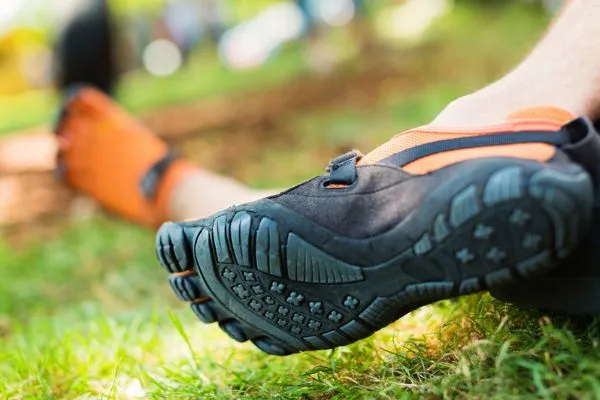
Barefoot shoes are designed to let your foot move as if it were bare, while still protecting it from the ground. Most share four features:
A wide, foot-shaped toe box so the toes can spread
A thin, flexible sole you can feel the ground through
Zero drop, meaning the heel sits level with the toes
Little or no arch support or cushioning
Barefoot or supportive: which is better for foot pain?
Neither is right for everyone. Both have a place, and the best choice depends on your feet, your pain and what you are doing.
Where barefoot shoes can help:
The roomy toe box takes pressure off bunions, corns and toenails
Your foot muscles work harder, which may make them stronger over time
Some people find they improve balance and their feel for the ground
Where barefoot shoes can make things worse:
Heel pain and plantar fasciitis, where the tissue needs offloading while it heals
Achilles and calf problems, as zero drop stretches and loads them more
Pain under the ball of the foot, with less cushioning between you and the floor
Long days standing on hard floors
Where supportive shoes help: a firm heel, cushioned midsole and some arch support reduce strain on tissues that are already injured or overworked. That is why we often recommend support while heel or tendon pain settles.
The catch with support: if a shoe does all the work all the time, the small muscles in your feet may have less reason to stay strong. Some research suggests minimal footwear can build foot strength, though the evidence is still developing.
The sensible middle ground is to use support as a tool, not a crutch, and keep your feet strong with simple exercises such as calf raises and toe spreading. For many people, barefoot shoes are one part of that, not a replacement for everything else.
The biggest mistake: switching too fast
Going straight from supportive shoes into barefoot shoes full-time is the most common way we see people hurt themselves. Feet used to support have adapted to it. Take it away overnight and the plantar fascia, Achilles tendon and calf suddenly do far more work. It is like going from no exercise to a 10k run.
The typical results are heel pain, Achilles pain, tight calves and aching under the ball of the foot. Pushing through can lead to more serious problems, such as stress reactions in the bones of the foot.
The same thing happens every summer when people swap trainers for flip-flops, and every winter when the wellies come out. Both are flat and unsupportive. Flip-flops also make your toes grip constantly, and wellies let your heel slide around inside.
Toe box fit: width, depth and length (what to look for)
If there is one thing barefoot shoes get right, it is the toe box. The good news is you can get a roomy, foot-shaped toe box in supportive shoes too, so you do not have to go fully minimal to benefit.
The toe box is the front of the shoe where your toes sit. Too tight, and it can cause or worsen bunions, corns, ingrown and thickened nails, and nerve pain such as Morton's neuroma.
Width: the shoe should be at least as wide as your foot at its widest point, across the ball of the foot. Your toes should be able to lie flat and spread slightly. If the shoe narrows to a point before your toes do, it is squeezing them.
Depth: there should be room above your toes as well as around them. Depth matters most if you have curled or hammer toes, bunions, thickened nails, or wear insoles, which all take up space. A shallow toe box rubs the tops of the toes and presses on nails.
Length: allow roughly a thumb's width between your longest toe and the end of the shoe. Remember your longest toe is not always your big toe.
Quick checks when buying shoes:
Shop in the afternoon, when feet are slightly larger
Stand up and walk around; feet spread under load
Take out the insole and stand on it: if your foot spills over the edges, the shoe is too narrow
Look for a toe box shaped like your foot, not a tapered point
Try shoes with the socks you will wear in them
Who should be cautious with barefoot shoes?
Speak to a podiatrist before switching if you have:
Current heel pain, plantar fasciitis or Achilles pain
Diabetes, poor circulation or reduced feeling in your feet
Arthritis or stiff joints in the feet or ankles
Very flat or very high arches that cause you pain
A history of stress fractures
A job that keeps you standing on hard floors all day
Want more advice about your foot or heel pain and what the best type of footwear is for you? If you live in the Knowle / Solihull / Dorridge / Balsall Common area, book a comprehensive MSK Assessment, which includes Gait Analysis, Footscan & Biomechanical Assessment at our Gait and Rehab clinic HERE
Frequently asked questions
Are barefoot shoes good for plantar fasciitis?
Usually not while it is painful. An irritated plantar fascia needs offloading, and a cushioned, supportive shoe with a slight heel raise usually helps it settle. Once the pain has eased, some people can introduce barefoot shoes gradually alongside strengthening exercises. If heel pain has lasted more than a few weeks, get it assessed: treatments such as Shockwave Therapy can help stubborn cases.
Can barefoot shoes cause Achilles pain?
Yes, and it is one of the most common problems we see after a switch. Most everyday shoes have a slightly raised heel. Barefoot shoes are zero drop, so the Achilles and calf stretch further and work harder with every step. Build up slowly, keep up calf raises, and avoid barefoot shoes while you have Achilles pain.
How long does it take to transition to barefoot shoes?
Usually several weeks to a few months for everyday walking, and longer for running. Start with an hour or two a day and add time gradually. A useful guide is how your feet and calves feel the next morning: stiffness or pain means you have done too much, so step back.
Are barefoot shoes good for bunions or Morton's neuroma?
The wide toe box can help both by taking pressure off the joint or nerve. Barefoot shoes will not straighten a bunion, but they may make it more comfortable. With Morton's neuroma, the thin sole can make pain under the ball of the foot worse, so a wide-fitting shoe with some cushioning is often the better choice. A podiatrist can also advise on padding or insoles.
What should I wear if I'm on hard floors all day?
For most people, a cushioned, supportive shoe with a roomy toe box is a better choice than a fully barefoot shoe. Look for a firm heel, a cushioned sole and enough room for your toes, and add insoles if you need them. Having two pairs to alternate between can also help. If your feet still ache at the end of each shift, an assessment can show why.
The bottom line: are barefoot shoes right for you?
So, are barefoot shoes the solution to your foot pain? For some people, they are part of it. For others, especially with heel or Achilles pain, they can make things worse before you fix the cause. There is no perfect shoe, only the right shoe for your feet and what you are doing.
If your feet hurt, the cause is often in how you walk and what you wear, not just where it hurts. At Gait & Rehab, our HCPC-registered podiatrists use biomechanical assessment, gait analysis and 3D foot scanning to find out why, and can advise on footwear, insoles and treatment such as Shockwave Therapy.
Book your MSK Assessment HERE or give us a call; details below.
Further reading:
Effects of Barefoot and Minimalist Footwear Strength-Oriented Training on Foot Structure and Function in Athletic Populations: A Systematic Review
Contact Gait and Rehab:
📞 01564 314614
📍 2 Chester Court, High Street, Knowle B93 0LL
With 2 hours of free parking and ground-floor access. We're here to help you get back to the activities you love, comfortably and confidently.